ML & AI / Season 3
S3-EP03: Why Edge AI Isn't A Thing (yet)

Okay. I get it now. Predictive queries, hybrid retrieval, RAG, Meeseeks agents... it's just a recipe. A clever recipe, but a recipe.
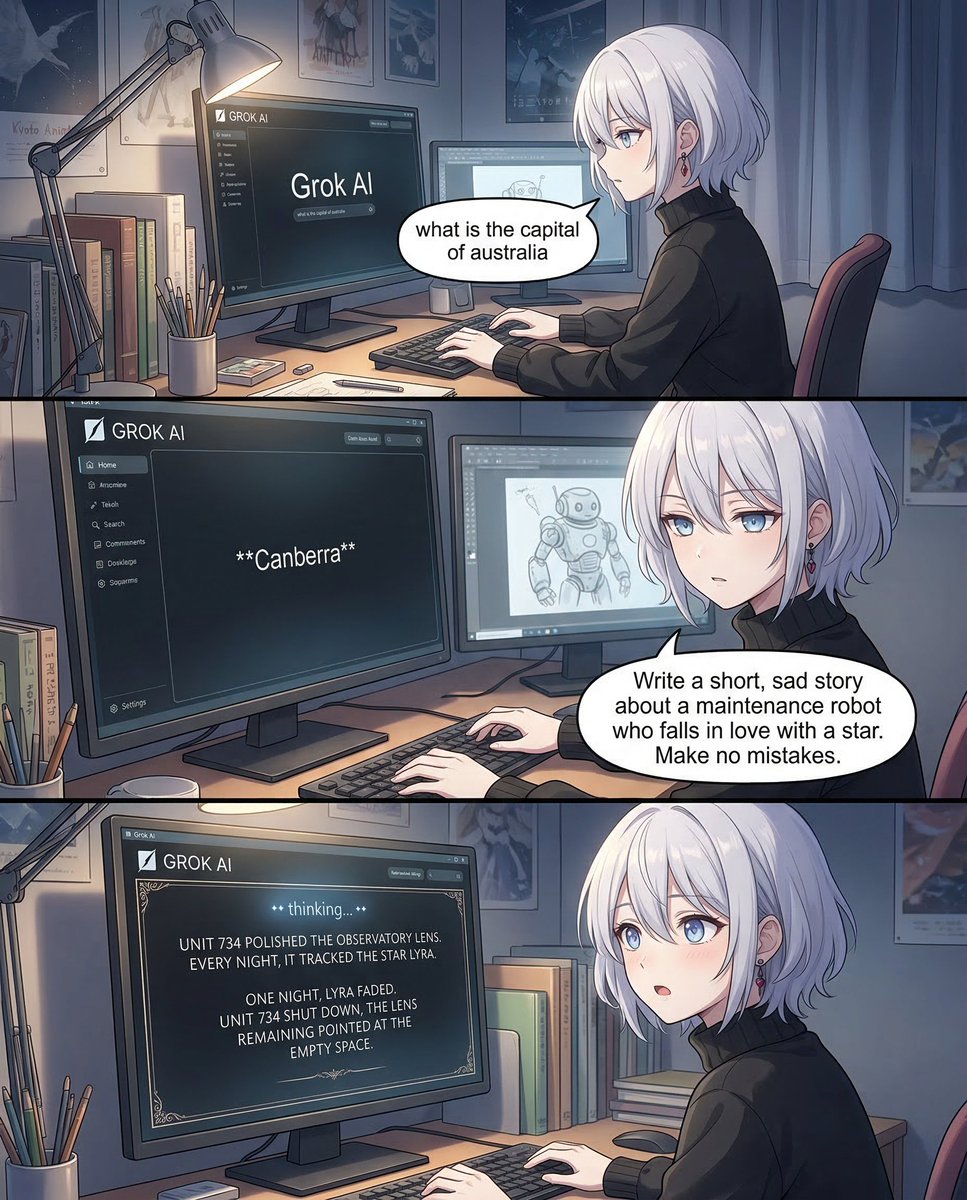
And I have a pretty good oven. Why am I paying $20 a month for Grok? I'll just build my own. Total privacy, no subscription fees. I'm beating the system!

You fool. Owning a kitchen and running a restaurant are 2 complete different things.
**Problem 1: Infrastructure costs**
Okay, 100 gigabytes for the model... another 20 for the embedding model... my hard drive is already crying.
Out of memory?! B-but I have 24 gigs of VRAM! That's insane!
It is. But the model needs 40. You haven't even loaded the vector database yet.
**Problem 2: Indexing Throughput**
Okay! It's loaded. Now, to build the index.
Three days? Just to make it searchable?
The big AI companies have already done this. Their index is built, hot, and globally replicated. You're trying to hand-write a dictionary before you can look up your first word.
3 days later...
It's done. It's finally done. My own private, local search engine.
**Problem 3: Token Throughput**
That's it? After all that, it's... worse than Google from 2005.
Four hundred dollars?! In electricity?!
And now, the lesson begins.
You think your 4090 is a powerful AI machine. It's not. It's a powerful **gaming** machine. You've brought a Ferrari to a factory job.
What's the difference?
The Ferrari is faster from 0 to 60. But the cargo plane can move a city's worth of packages for a fraction of the fuel per package. Your GPU is a bespoke artisan. Theirs is an industrial factory.
Okay, so their hardware is better. But is it that much better?
It's not just about the hardware. It's about the utilization. Your Ferrari is sitting in the garage, engine running, 24/7. You only use it for 45 seconds to drive to the corner store. You're paying for all that idle time.
Their cargo plane never stops flying. Its cost is divided among a million different packages. You're paying a driver full-time salary. They're paying a gig worker by the word.
The word... like... a token?
Yes. Your query might have been 2,000 tokens. For their hyper-efficient factory, the cost to process is fractions of a cent.
Your $20 a month subscription isn't buying you one answer. It's buying you access to a ten-billion-dollar factory, but only for the 180 milliseconds you actually need it. It is the most efficient rental agreement in history.
So my plan to 'beat the system' was like trying to print my own money at home to save on bank fees.
You've discovered the economics of modern AI. It's not the models; many of those are becoming open-source. It's the **infrastructure** you are paying money to rent.
But what makes their factory so much better? It's still just a bunch of GPUs, right? Just... more of them?
No. They aren't just using more. They are stacking a bunch of ruthless optimizations, from the silicon all the way up to the software.
**Optimization one: The Communication Superhighway.**
Your first problem was that the big model didn't fit on your one GPU. In a datacenter, that's normal. A single powerful model might live on eight different H100s at once.
So how do the GPUs talk to each other? Through the motherboard?
That's the slow way. The PCIe bus on a motherboard is a winding country road. It's fine for light traffic, but a disaster for a supercomputer.
Datacenter GPUs don't use the country road. They are connected by networking tools such as **NVLink**.
It's a private, 16-lane superhighway built directly between the GPUs.
This one piece of hardware allows them to act as a single, massive brain, not eight separate ones.
**Optimization two: The Student Becomes the Master.**
Okay, so the hardware is better. But the models themselves are still huge and slow.
You're right. Models with trillions of parameters are too slow for real-time search. They are the 'teacher' models. They are geniuses, but they're ponderous.
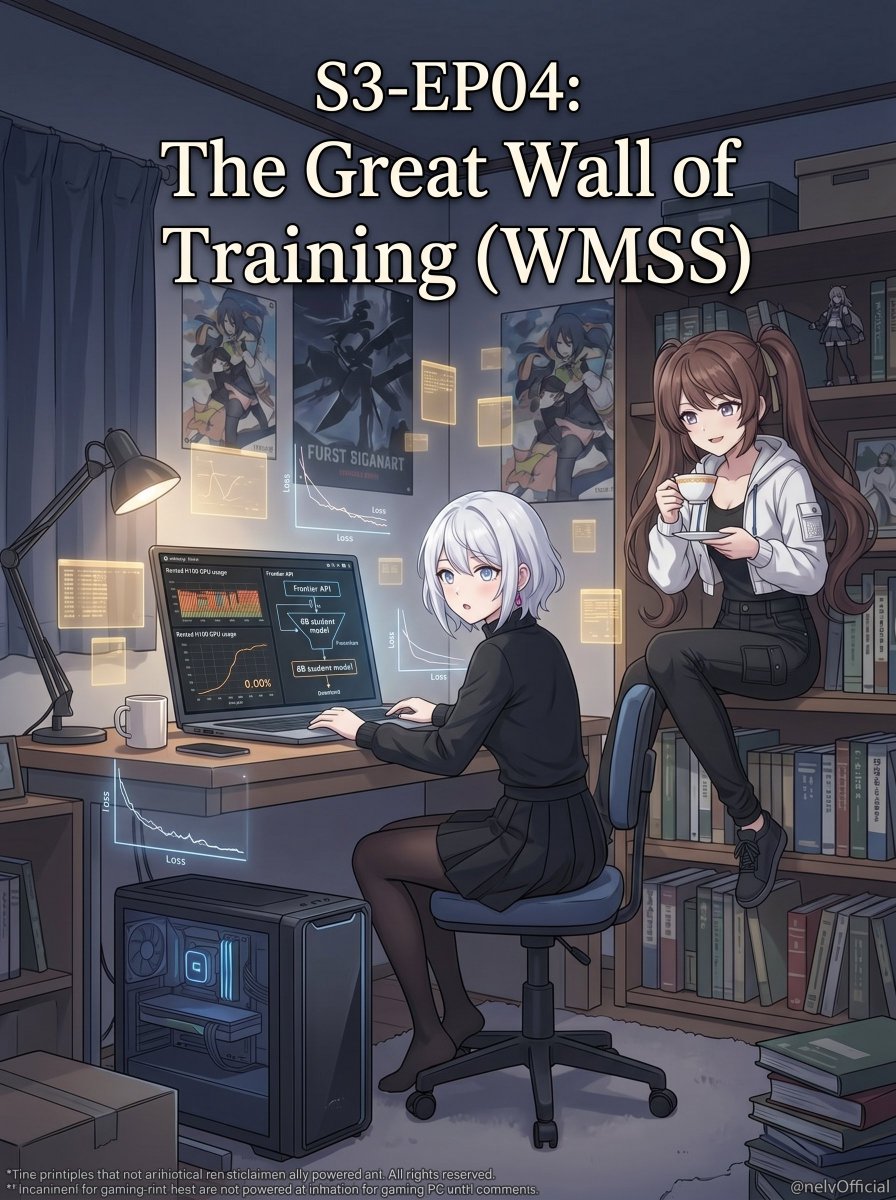
So, the AI companies use these giant models to train smaller, faster 'student' models. This is called **Model Distillation**.
The student model learns the patterns and the 'intuition' of the master, but its brain is a fraction of the size.
So the final model I'm talking to isn't the giant one? It's a student?
Exactly. It's 95% as smart, but ten times faster and a hundred times cheaper to run.
Why pay to consult a slow and expensive professor when you could talk to his brilliant, lightning-fast teaching assistant?
**Optimization three: The Elevator.**
Okay. Better hardware, smaller models. What else?
The elevator.
The elevator?
Your PC handled your one query by itself. That's incredibly inefficient. It's like an elevator in a skyscraper making a trip for just one person. The energy cost of the trip itself is huge.
Most datacenters use **Request Batching**. They don't run your query the microsecond it arrives. They make it wait. For a few milliseconds.
They collect a 'batch' of a hundred different queries from a hundred different users and process them all in one go.
The cost of the 'trip' is now divided by a hundred. This trick alone massively reduces the cost per query.
Recap. They use a private superhighway between their GPUs. They use smaller, distilled student models that are cheaper to run. And they batch thousands of requests together to divide the cost.
So... rather than failing my setup, I could be paying for 20 years of Grok?
It is a good lesson. Now we need a sponsorship to cover our GPU costs.